
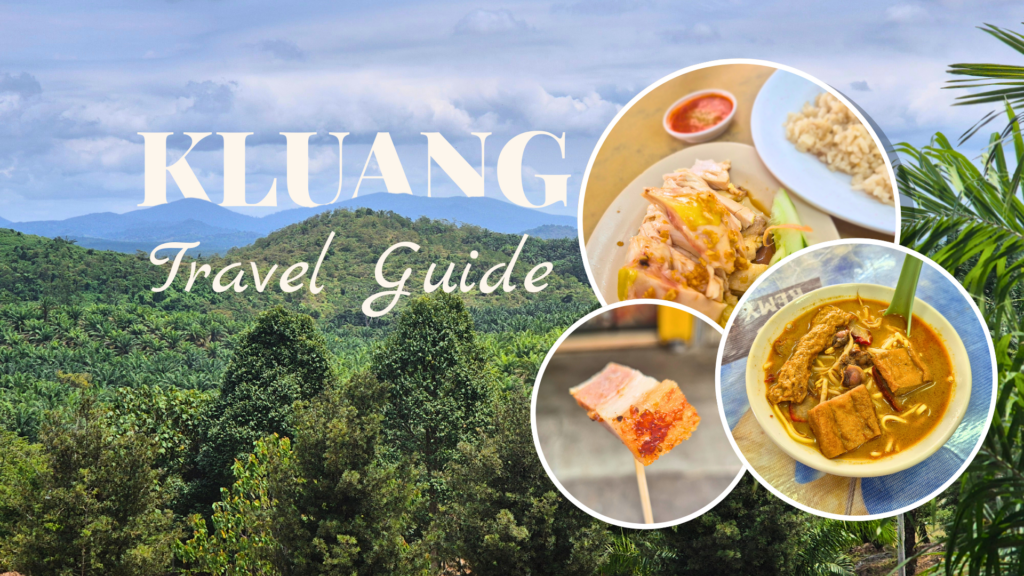
Planning a day trip to Kluang? This honest Kluang travel guide shares what to eat, what activities to do, and whether it is worth the 2-hour drive from Singapore.
Estimated read time: 8 minutes
As part of my mission to try new places, I decided to go beyond the usual Johor Bahru and explore another district in Johor, Kluang, instead. Located about 129km from Singapore, it takes roughly two hours to reach by car, depending on traffic conditions.
If you are planning a day trip, this Kluang food guide shows you where to eat and what you can do while you are there.
Kluang is not a place filled with theme parks or dozens of famous attractions. It is quieter and slower paced. Based on my research, most people come primarily for Kluang Food, and that was my focus too.
Kluang’s History
Kluang’s early development was closely linked to the construction of the railway. It can even be said that the town was born because of the railway and prospered because of it.
In the early 20th century, Kluang grew as a key railway hub connecting Johor to other parts of Malaysia. The railway supported the expansion of rubber and oil palm plantations, which became important economic drivers for the town. Over time, Kluang developed into a small but significant administrative and commercial hub in Johor.
What Makes Kluang Food Worth Trying?
Kluang’s food scene feels traditional and less commercialised compared to JB. You will find coffee shops (usually known as ‘restorans’ in Malaysia), roast meat stalls and long-running family businesses.
If you are visiting mainly for Kluang Food, keep your expectations realistic. Some dishes will impress you, others may feel average. It is about discovering local flavours at your own pace and seeing how they differ from what you are used to.
Tip: Most of the food spots are clustered in two different areas, so pin them on Google Maps to plan your route more efficiently.
Where Should You Eat in Kluang Johor?
Here’s our Kluang food guide; food we have tried.
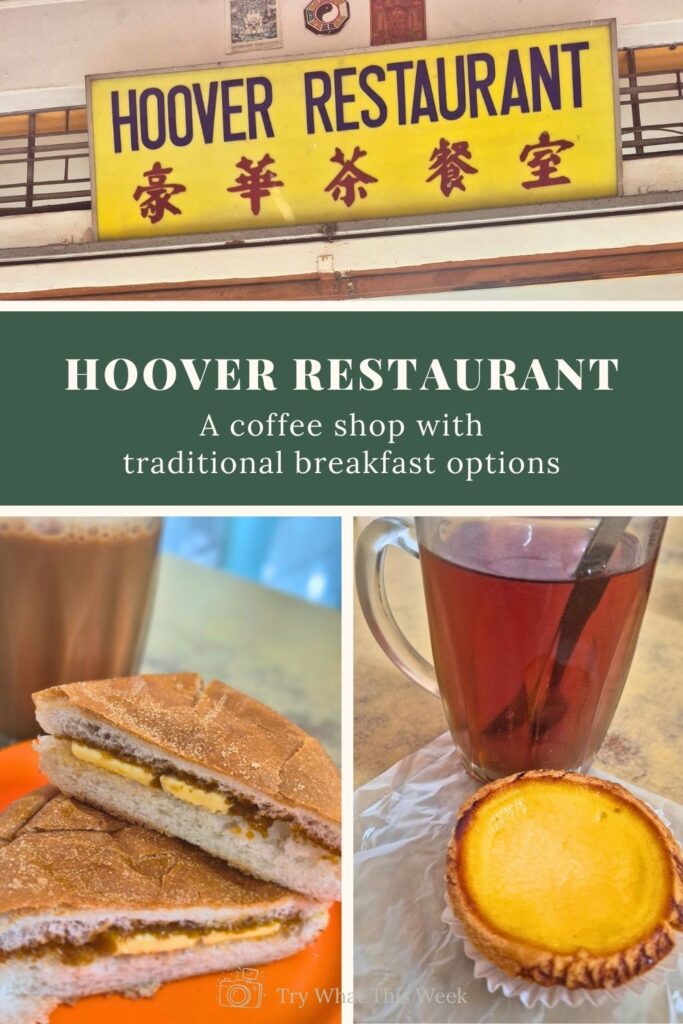
Hoover Restaurant (豪华茶餐室)
A coffee shop that offers traditional breakfast options. We had nasi lemak, kaya butter toast and tea. The food was decent but, to be honest, it was the only meal that felt underwhelming. Nothing was bad, but nothing stood out either. If you are short on time, you can skip this and head to Kluang Rail Coffee instead, which many people highly recommend. (We skipped the place as coffee is not really our thing.)
Hoe Kee Roast Pork (金福烧肉)
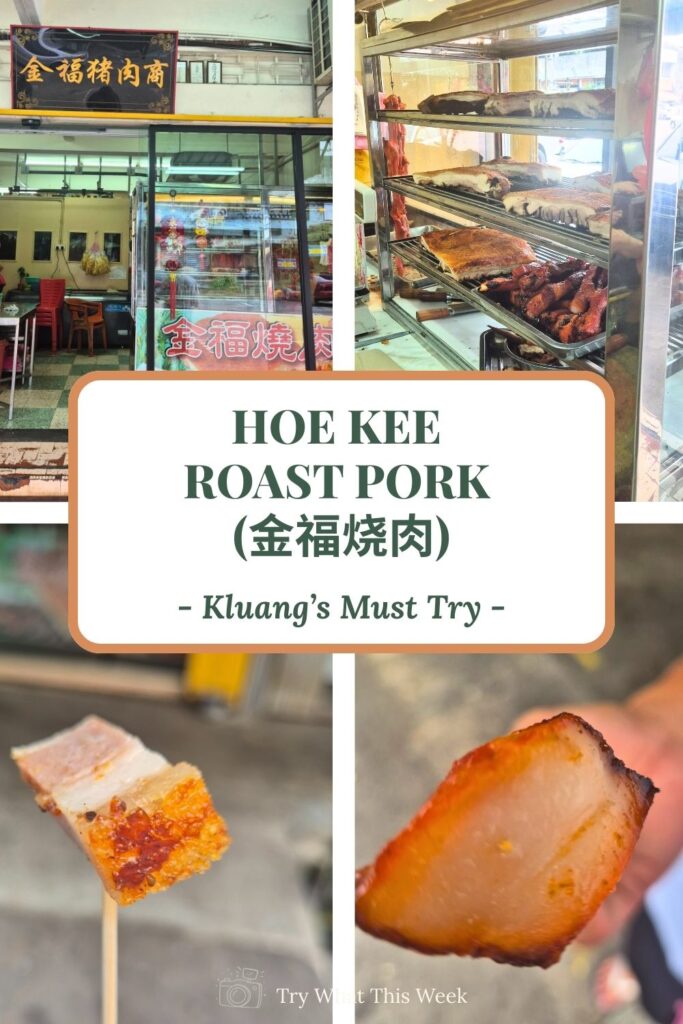
This was one of the highlights of our Kluang Food experience. Unlike the usual roast pork, which is typically made from pork belly, this version uses pork neck (猪劲). The cut gives the meat more softness, tenderness and juiciness. The skin was crisp and crackling, and the contrast in texture made every bite satisfying. This is a must try.
Do not miss the char siew too! Go for the slightly fattier cuts rather than the lean, skinny pieces. The lean ones were harder to chew, whereas the fattier cuts had more flavour and keeps the meat moist.
Tip: You can order according to your preferred portion size, which is helpful if you are hopping between multiple food stops.
Kluang Hakka Chicken Rice
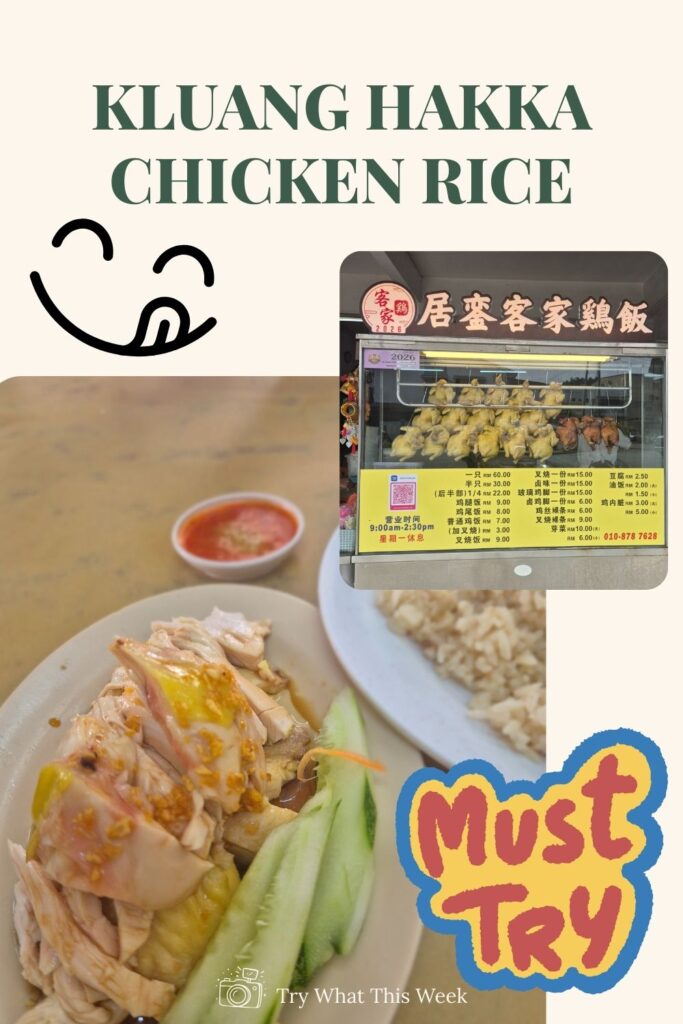
This was an accidental discovery while we were walking around the town. You cannot find it on Google Maps, so I have pinned another stall located in the same coffee shop instead.
Unlike the Hainanese chicken rice that we usually have, this Hakka version came topped with fried garlic bits. The garlic added a crispy texture, and together with the flavour of the kampung chicken, it tasted more fragrant. I can safely say I am now a convert to this Hakka version. At RM7 for a plate, it was also very affordable. 10 out of 10 highly recommend this place.
Gerai Makan Botak (摩达咖喱面)
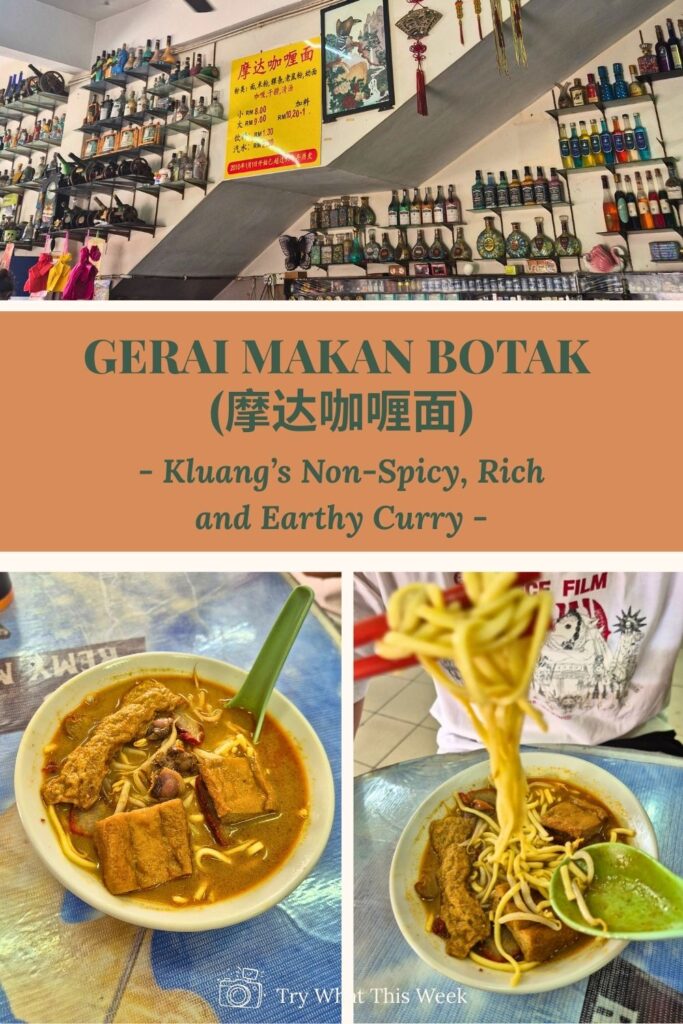
This shop has been around for more than sixty years and is a local favourite in Kluang. The locals would consider it as one of the town’s representative dishes.
It’s shared that the business started with Madam Luo Huang Qian and is now run by the third generation, who continue to uphold the family trade. Fun fact, the stall earned its nickname “Botak Curry Mee” because the second-generation owner was bald, and customers fondly called him “Botak”.
The curry is herbal-style and non-spicy, quite different from heavily spiced Indian curry or sweet Japanese curry. It comes with ingredients such as bean curd and blood cockles (also known as ‘see hum’ in Cantonese). The flavour is rich and earthy, a taste that you would never get tired of. The yellow noodles also do not have the usual strong alkaline taste and are very springy.
The owner who enjoys collecting teapots, wine bottles, toys and stickers had displayed them neatly throughout the shop, adding character to the dining experience. Do not miss trying this curry.
Yean Kee Beef Noodles (元记牛肉濑粉)
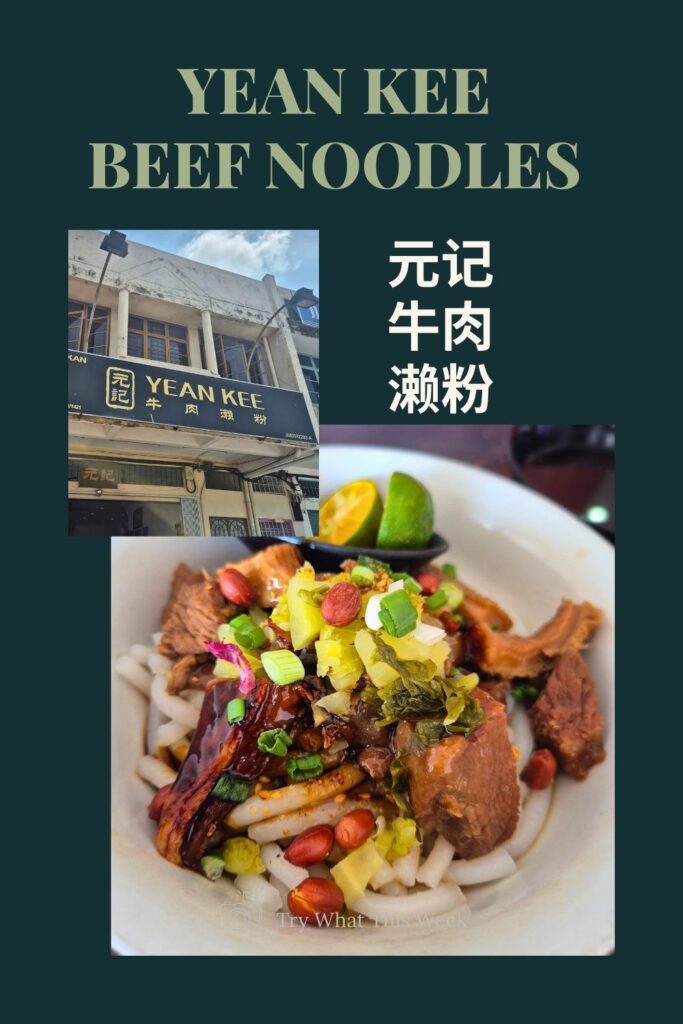
Their signature is the dry beef noodles. Honestly, I was not particularly impressed by the sauce or beef slices, but the handmade mee tai mak stood out. The noodles were chewy, like soft gummy strands. If you enjoy handmade noodles, you may appreciate this more than I did. Personally, I prefer Tangkak’s beef noodle.
Kefi Farm Cafe
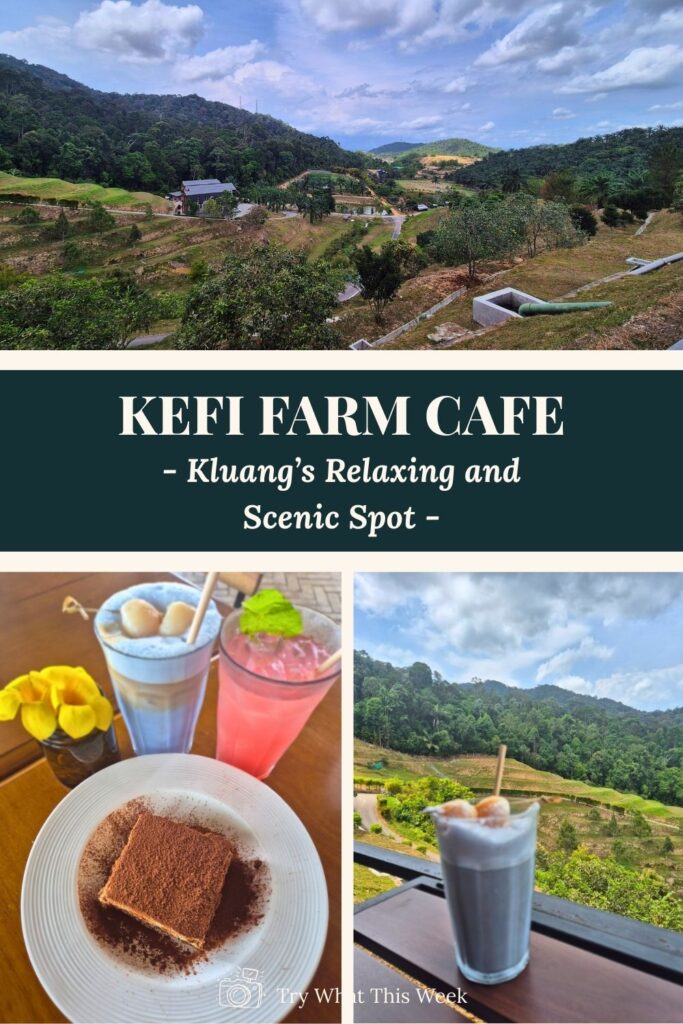
By this point, we were already full. Our main purpose was to step away from the usual hustle and bustle, relax and enjoy the scenery. Hence, we only ordered drinks and tiramisu, both were average. Nonetheless, if you want a break between eating spots, this is a decent place to sit and unwind. (More about the view below)
What Activities Can You Do in Kluang Johor?
While Kluang Food may be the main draw, there are a few simple activities to round out your trip.
Explore the old heritage lanes – Jalan Ismail and Jalan Lambak
(Google Map – Jalan Ismail) (Google Map – Jalan Lambak)
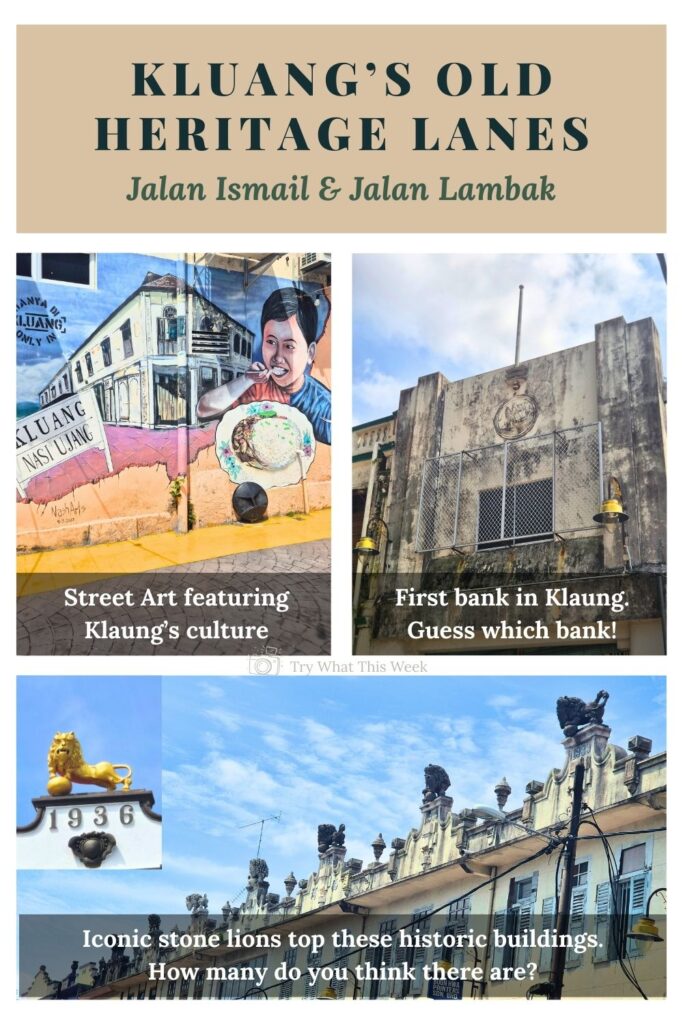
These two streets form part of Kluang’s older town centre. You will see traditional shophouses with colourful façades and murals painted along the alleyways. They are also regarded as the starting point of Kluang’s hundred-year education history, which is why they are often referred to as the town’s cultural and scholarly streets.
If you look up at some of the older buildings, you may spot lion statues placed on the rooftops. Across the two streets, there are 16 unique stone lions, each with its own distinct design.
Take your time to walk around, enjoy the street art, pop into small provision shops, and observe daily life.
Check out this video (in Chinese) that shares more about these two lanes and their history.
Visit the Kluang Coffee Factory
If you are a coffee lover, you can visit the Kluang Coffee Powder Factory. It has been around for decades and is well known locally. You can buy traditional coffee powder and packaged drinks as souvenirs. We skipped this as we prefer tea, but it is a popular stop for many visitors.
Enjoy the Views at Talula Hill Farm
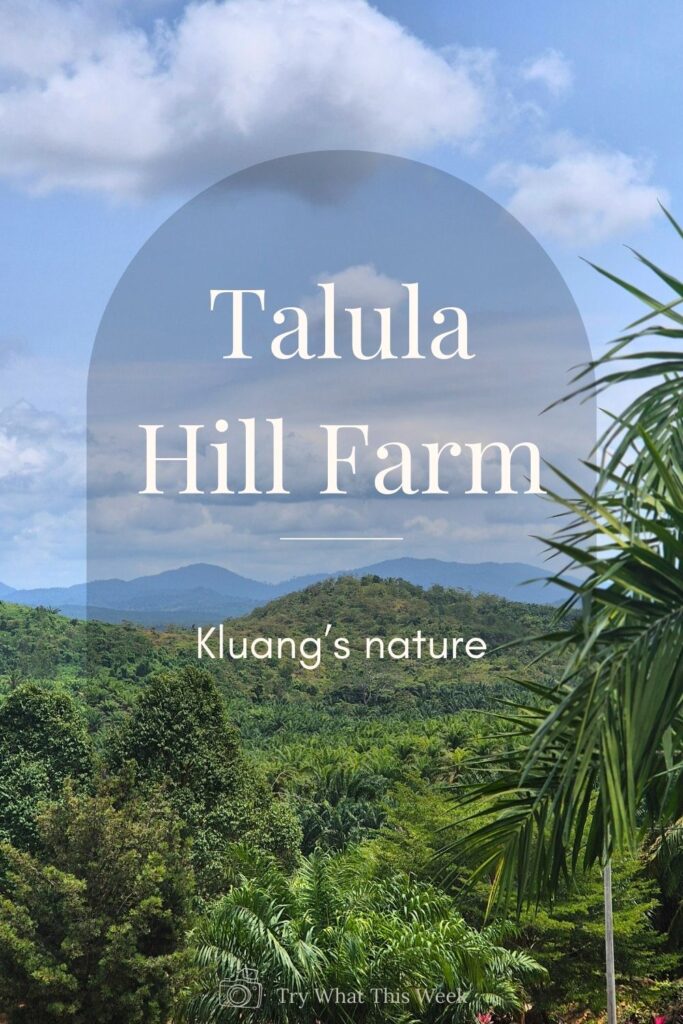
Our last stop was Talula Hill Farm. We first made a short stop at the nearby 云仙门善院 temple. Take your time to immerse yourself in the scenery on this side of the hill. It was a clear day for us, so we could see layers of mountains stretching into the distance. The shades gradually changed from darker green in the foreground to soft bluish tones further away. The open landscape felt calm and expansive, reminding me that I am just a tiny speck in this vast world, and that many of my daily worries are smaller than they seem. It was a timely reminder to stay focused and not overthink things.
In comparison, the view from Kefi Farm Cafe overlooks plantations, forests and resort grounds. It is still green and peaceful, just less magnificent. Nonetheless, it is a pleasant place to sit, rest and chat after a full day of exploring.
So, is Kluang Food Worth the Trip?
If you enjoy slow travel, exploring local eateries and short scenic walks, then yes, it makes for a relaxed day trip.
For me, the roast pork and Hakka chicken rice alone made the drive worthwhile.
So, would I return? Yes, mainly for the food, and perhaps to uncover a few more hidden spots next time.